


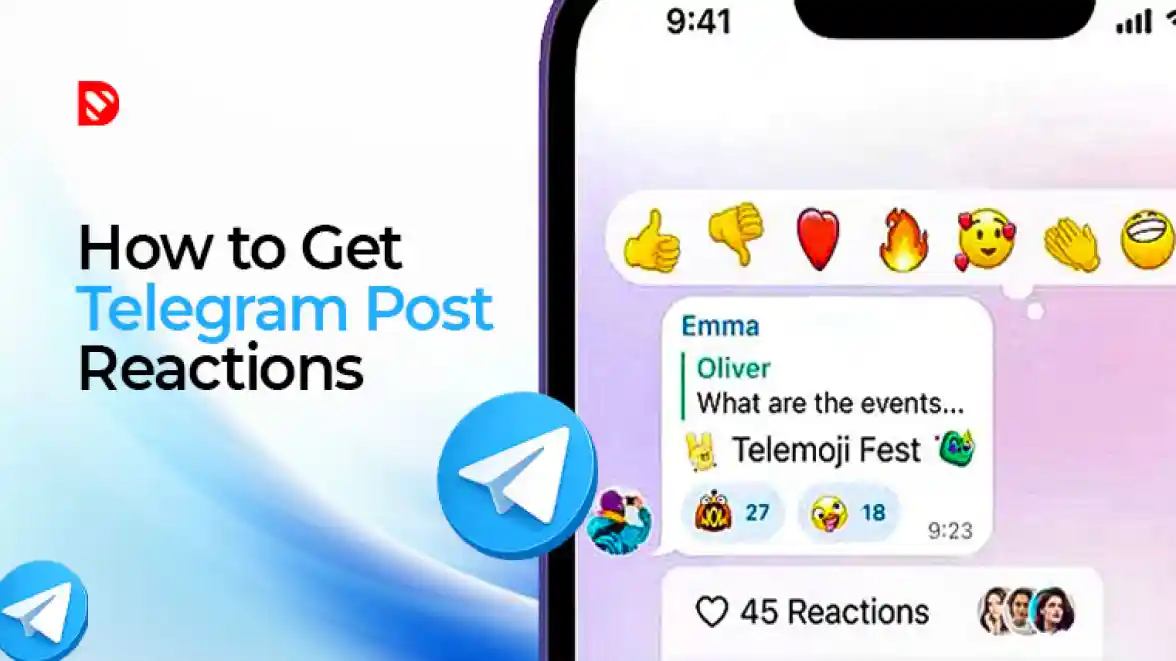
Quick Answer: Telegram post reactions (emoji responses) are powerful engagement signals that increase your post's visibility in followers' chats and channels. To maximize reactions, create content that naturally invites emotional response, use explicit reaction CTAs ("React with 🔥 if you agree"), post at peak times, and engage with your community daily. Creators who focus on reactions typically see 2-3x higher message forwarding and channel growth within 4-6 weeks.
Why Telegram Post Reactions Matter More Than You Think
Most Telegram users think reactions are just "nice to have." Wrong. Telegram's algorithm treats reactions as a core engagement metric that determines whether your post gets shown to more people. Here's how it works:
- Reactions boost post visibility — posts with higher reaction counts are pinned higher in chat threads and recommended to followers more frequently.
- Reactions signal relevance — each reaction tells Telegram's algorithm "this content resonates with people," triggering more distribution to similar audiences.
- Reactions drive message forwarding — posts with lots of reactions get shared and forwarded more, which amplifies reach exponentially beyond your direct followers.
- Reactions build community momentum — seeing others react encourages more people to react, creating a viral feedback loop.
A post with 50 reactions on Telegram can reach 5x more people than a post with 0 reactions, even if both posts have identical text and images.
1. Create Content Built for Emotional Response
Reactions are inherently emotional. People react when something makes them feel something. Build your content to trigger natural emotional responses:
- Surprising or shocking updates — "We just launched something you didn't expect" or "Plot twist" content naturally gets 🔥 and 😍 reactions.
- Relatable or funny moments — humorous observations or shared experiences get 😂 and ❤️ reactions from people saying "That's me."
- Inspirational or feel-good stories — wins, achievements, or heartwarming news get ❤️ and 👏 reactions organically.
- Controversial or debate-worthy takes — thoughtful opinions that make people think (without being inflammatory) get 👍, 🤔, and fire reactions as people engage with your perspective.
- Milestone announcements — reaching a subscriber goal, launching a product, or celebrating a company win triggers 👏, 🎉, and ❤️ reactions naturally.
Weak reaction-bait: Bland updates like "We're still here" or generic industry news nobody cares about. Don't expect reactions if there's no emotional hook.
2. Use Direct Reaction CTAs (Ask for the Specific Emoji)
The most effective tactic: explicitly ask for reactions using the exact emoji you want.
Reaction CTA examples:
- "React with 🔥 if you think this is a game-changer."
- "Drop a ❤️ if you're excited about this launch."
- "Hit us with 👍 if you agree."
- "React with 😍 if you love this feature."
- "Show us 👏 if you think this is underrated."
Research shows posts with explicit emoji CTAs see 40-70% higher reaction rates than posts without them. People need permission and clarity to know what to do.
Pro tip: Use text overlay or bold formatting to make the CTA stand out. If your post has an image or graphic, add the emoji call-to-action directly on it so it's impossible to miss.
3. Post at Peak Telegram Activity Times
Timing affects early momentum. Posts that get reactions in the first 30 minutes get algorithmically boosted, so posting at peak times is critical.
- General peak times: 8 AM–10 AM (morning check), 12 PM–1 PM (lunch break), 6 PM–9 PM (evening wind-down).
- Check your analytics — if you're a channel admin, Telegram shows engagement stats. Post your next 5 messages at different times and compare reaction counts to find YOUR peak window.
- Post on weekdays, not weekends — Telegram sees higher engagement Monday–Friday. Weekend posts get fewer reactions overall (people are offline or focused on other activities).
- Avoid posting during major events — if there's a global event, major news, or trending topic taking attention, your post will get buried. Wait for the cycle to calm or lean into the trend.
4. Use Compelling Visuals (Images and Thumbnails Matter)
Posts with images get 3-4x more reactions than text-only posts on Telegram. Visuals stop scrolling and trigger emotional response faster than words.
- Use high-contrast, bold images — avoid busy, low-contrast visuals. A clear, striking image gets more reactions than a cluttered one.
- Include faces or human emotion — photos with faces showing emotion (smiling, surprised, excited) get more reactions because emotions are contagious. People react to seeing other people react.
- Use the right format — square or vertical images work best on mobile-first Telegram. Avoid super-wide horizontal images that get cut off.
- Add text overlays to images — combine the visual with your reaction CTA overlaid on the image itself. "React with 🔥 if you agree ↓" placed right on the image drives action.
5. Build a Reaction Habit (Post Consistently)
Telegram's algorithm favors active channels. Channels that post regularly build audience momentum and higher baseline reaction counts.
- Post 4-7 times per week minimum — consistency signals active channel, which triggers algorithm promotion.
- Space posts throughout the day — don't dump all posts at 9 AM. Post at different times to catch different audience waves and maximize total reactions across all posts.
- Maintain a content calendar — plan your posts in advance so you're never scrambling or missing posting windows. Planned, consistent posting beats sporadic "whenever I feel like it" posting.
6. Engage With Comments and Build Community
Channels with active comment discussions get more reactions because engagement breeds engagement. When people see others reacting and commenting, they're more likely to join in.
- Reply to comments within the first hour — quick responses show you're active and engaged, which encourages more people to comment and react.
- React to comments yourself — if someone comments "Great post!" — react to their comment with a ❤️. This creates a feedback loop and shows you value engagement.
- Ask follow-up questions in comments — "What's YOUR take on this?" or "Which option would you choose?" invites more comments, which increases post visibility, which drives more reactions.
7. Lean Into Trending Topics and Current Events
Posts about trending topics get algorithmic boosts and higher baseline reaction counts because more people are thinking about those topics.
- Monitor Telegram's "Trending" section — see what's trending in your region and niche, then create your own take on those topics.
- Tie your content to news cycles — if there's a major announcement in your industry, post your perspective on it while it's fresh. Early reactions get compounded as more people discover the topic.
- Create seasonal content — major holidays, product launches, or industry events are reaction magnets because everyone's paying attention.
8. Use Question Posts (Reactions = Micro-Opinions)
Posts phrased as questions naturally invite reactions as micro-answers. "Do you agree? React with 👍 or 👎" gets massive engagement because people want to express their opinion quickly.
- "Would you…?" scenarios — "Would you do this for ₦1M?" or "Is this a good idea?" with reaction options (👍 or 👎) get tons of quick reactions.
- Polls disguised as reaction posts — instead of text, use reactions as poll responses. "React 🔥 if you think X is overrated, ❤️ if you love it."
- Curiosity-driven questions — "Can you guess what happens next?" or "What would you do here?" drive reactions because people want to participate in the answer.
9. Highlight Reactions in Follow-Up Posts
Acknowledging high-reaction posts creates a feedback loop. Call attention to posts that got lots of reactions and people will be more motivated to react to future posts.
- Reference viral posts — "Thanks for the 500+ reactions on yesterday's post! You all clearly love X topic" encourages more engagement on similar future posts.
- Create reaction-based content series — if a post about "Telegram marketing tips" got tons of reactions, do a follow-up: "Based on your reactions, here are 5 more tips you asked for."
- Show reaction breakdowns — occasionally share which reactions a post got the most of (e.g., "This post got 200 🔥, 150 ❤️, and 100 👍 reactions"). This data satisfies curiosity and encourages more reactions on future posts.
10. Create Shareable/Forwardable Content
Posts with high reactions often get forwarded to other channels. Forwarding signals to Telegram's algorithm that your content is valuable, which boosts the original post's distribution.
- Make posts self-contained — avoid "you had to be here yesterday to understand this." Make each post readable and valuable on its own so it's easy to forward without context.
- Create content worth forwarding — tips, quotes, insights, or surprising facts that people want to share with other channels and groups.
- Use formatting that survives forwarding — bold text, clear emojis, and organized layouts look good even when forwarded to other channels.
11. Respond Fast to Reactions (Momentum Matters)
Telegram posts peak in reactions within the first 2-4 hours. If you want maximum reaction velocity, stay active during that window.
- Pin high-reaction posts — if a post is getting 50+ reactions in the first hour, pin it to your channel top. This keeps it visible and drives even more reactions as new visitors scroll.
- React to your own posts — react to your post with a reaction that reinforces your CTA. If you asked for 🔥, react with 🔥 first to "anchor" the reaction type.
- Don't delete underperforming posts too fast — give posts at least 24 hours to accumulate reactions before removing them. Sometimes posts gain momentum slowly.
12. Cross-Promote to Other Platforms (Telegram is Part of a Larger Strategy)
Don't treat Telegram in isolation. Promote your Telegram channel on TikTok, Instagram, Twitter, and other platforms, and mention Telegram wins in those spaces to drive traffic and reactions.
- Share Telegram posts to Instagram stories — screenshot high-reaction posts and share to stories with a "Join us on Telegram for daily updates" CTA.
- Reference Telegram in TikTok/YouTube videos — mention your Telegram channel as the "exclusive community" where followers get real-time updates and can react to breaking news.
- Collaborate with other Telegram channels — partner with similar channels to cross-promote, exposing your content to new audiences who are more likely to react.
Watch: How to Get Telegram Post Reactions (Video Guide)
Here's a visual walkthrough of reaction-maximizing strategies:
For more growth strategies across all platforms, subscribe to the DDBoost YouTube channel.
Scale Your Telegram Growth With DDBoost SMM Services
The strategies above work — but building a high-engagement Telegram channel from scratch takes months of consistent effort. If you want to accelerate your Telegram channel's growth and reaction counts, DDBoost's SMM services connect you with engaged audiences who are actively looking for content like yours and more likely to react and forward your posts.
Whether you're launching a new Telegram channel, scaling an existing one, or testing new content formats, DDBoost helps you reach the right audience faster so reactions compound quicker. Explore DDBoost SMM services to supercharge your Telegram growth.
FAQ: Getting More Telegram Post Reactions
What's the difference between reactions and comments on Telegram?
Reactions are emoji responses (quick, 1-tap engagement). Comments are text replies (deeper engagement that requires more effort). Telegram's algorithm weighs both, but reactions are a faster signal because they require zero effort. A post with 200 reactions signals broader resonance than a post with 5 comments. Both matter, but reactions indicate scale.
Do Telegram reactions affect how many people see my post?
Yes, directly. Posts with high reaction counts get pinned higher in channel feeds and recommended to more users. Telegram also shows posts with high reactions to people who've recently joined the channel, so reactions act as a "quality filter" that boosts distribution.
Which reactions get the most weight in Telegram's algorithm?
Telegram doesn't publicly disclose this, but based on platform behavior, all reactions appear weighted equally. The algorithm seems to care about reaction volume (total count) more than reaction type (which emoji). However, certain reactions (👍, ❤️, 🔥) are more common, so they're easier to accumulate at scale.
How long should I wait before posting follow-ups to the same post?
Wait at least 24 hours. Let the original post accumulate reactions and comments fully before moving on. Posting a follow-up too soon dilutes engagement across multiple posts. If your first post is still getting reactions, let it run its full cycle (usually 48-72 hours of meaningful engagement).
Can I use bots to automate reactions on Telegram?
Technically yes, but don't. Telegram actively detects and penalizes bot engagement. Fake reactions will trigger algorithm suppression, and Telegram may restrict your channel. Real reactions from real users always outperform bot-generated reactions. Focus on organic tactics instead.
What's a "good" reaction count for a Telegram post?
It depends on your channel size. A new channel with 500 followers getting 10-20 reactions per post is healthy. A 50K-follower channel should aim for 100+ reactions. A 500K+ channel should target 500+. Use your own baseline: if you're seeing 30 reactions average, aim for 40-50 next month, then 60+ the month after. Incremental improvement is realistic growth.
Should I delete posts that get very few reactions?
Not immediately. Give posts at least 24-48 hours before deleting. Sometimes posts gain traction slowly, especially if they're posted during off-peak times. Review your post performance weekly, and only delete posts that consistently underperform (bottom 20% over a month). Use this data to inform future content, not to panic-delete low-reaction posts.
How do I encourage people to react instead of just scrolling?
Be explicit. Use direct CTAs with the exact emoji you want: "React with 🔥" is 10x more effective than "Let us know what you think." People need permission and clarity. Also, react to your own post first with that emoji — it anchors the reaction type and shows followers what you're asking for.
Can reactions on one channel affect reactions on other channels?
Not directly. Each channel's algorithm is independent. However, if you cross-promote (mention your other Telegram channels in posts), you can drive traffic between them, which indirectly boosts reactions on all your channels. But the reaction counts themselves don't transfer.
What's the best time to post on Telegram for maximum reactions?
No single "best time" exists globally. Test posting at 8 AM, 12 PM, 6 PM, and 9 PM over 2-3 weeks, then compare average reaction counts. Whichever time window consistently outperforms is your "peak time." Most channels see peaks during lunch (12-1 PM) and evening (6-9 PM), but YOUR audience might differ. Use data, not assumptions.
Learn more growth techniques like this one by subscribing to our channel - DDBoost YouTube Channel.