


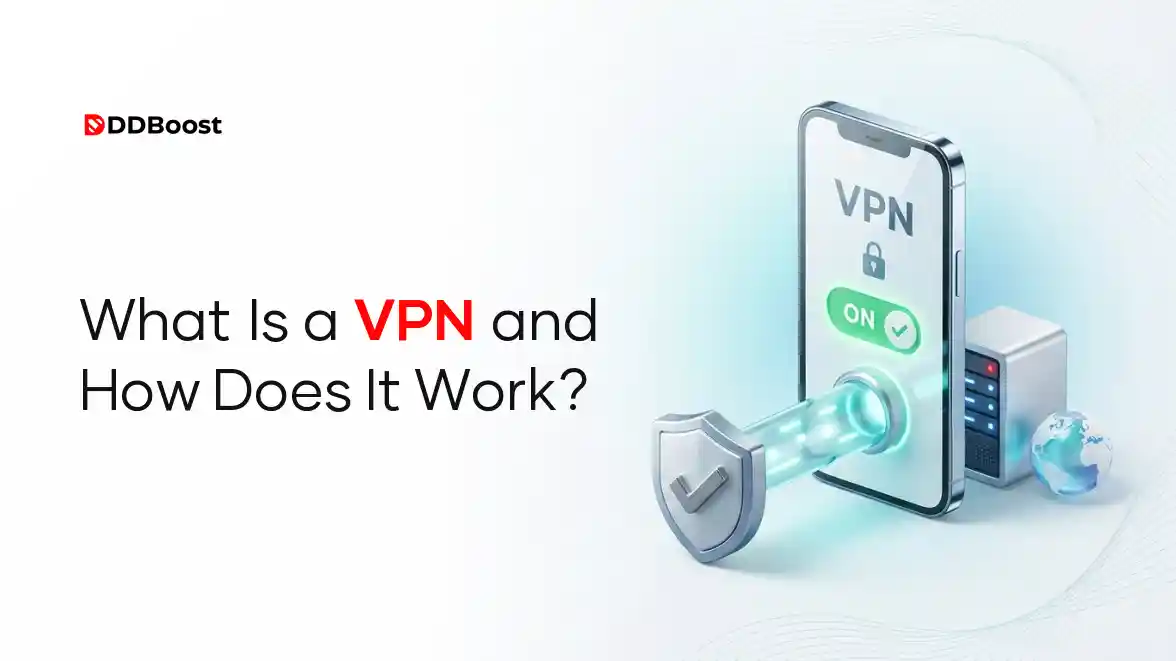
Quick answer: A VPN (virtual private network) is an app that sends your internet traffic through a locked, private connection to another computer called a server. Your network provider and anyone else on your Wi-Fi can see that you are connected, but not what you are doing. Websites see the server's location instead of yours.
What is a VPN, in plain words?
Think of your normal internet connection as sending a letter in a clear envelope. The people who carry it (your network, your Wi-Fi owner) can read the address and, in some cases, what is inside.
A VPN puts that letter inside a sealed, opaque envelope and sends it to a middleman first. The middleman (the VPN server) opens it, posts it on to the website, and sends the reply back to you the same way.
How does a VPN work step by step?
- You open the VPN app and tap connect. The app talks to a server owned by the VPN company.
- A secure "tunnel" is set up. This is just a private, scrambled line between your phone and that server. Scrambling data so others cannot read it is called encryption.
- Your apps send traffic into the tunnel. WhatsApp, Chrome, YouTube and the rest now go through the VPN instead of straight out to the internet.
- The server fetches what you asked for. It visits the website on your behalf, using its own IP address. An IP address is the number that tells the internet where to send data, a bit like a house address.
- The reply comes back through the tunnel. The app unscrambles it and you see the page as normal.
What a VPN hides, and from whom
| Who is looking | Without a VPN | With a VPN |
|---|---|---|
| Your network (MTN, Airtel, Glo, 9mobile or your home internet provider) | Can see which websites you visit | Sees that you are connected to a VPN, and how much data you use, but not which sites |
| Someone on the same public Wi-Fi | May see some of your traffic | Sees only scrambled data |
| The websites you visit | See your real IP address and rough location | See the VPN server's address and country |
| The VPN company | Not involved | Can see where your traffic goes, so you must trust it |
That last row matters most. A VPN does not remove the need for trust. It moves your trust from your network provider to the VPN company. This is the main reason to be careful with free VPN apps from unknown developers.
What a VPN does not do
- It does not make you anonymous. If you log into Facebook or Gmail, they know it is you, VPN or not.
- It does not stop scams. A fake bank alert, a phishing link or a "send your OTP" message works the same with a VPN on. Your judgement is still your best defence.
- It does not remove viruses. A VPN is not an antivirus. A bad app on your phone can still steal data.
- It does not hide you on a work or school network they control. Admins can often see that you are using a VPN, and many block it.
- It does not save data. It usually uses a little more, because of the extra scrambling.
If you want the detail on that last point, we break down how much extra data a VPN really uses.
When a VPN is worth using in Nigeria
- Public Wi-Fi. Airport lounges, hotels, cafes and campus hostels. Anyone can set up a network with a friendly name. A VPN scrambles your data so a stranger on that network cannot read it.
- Remote work. Some companies require a VPN before you can open their internal systems from home.
- Privacy from your network provider. If you simply do not want your provider to log which sites you visit, a VPN stops that.
- When a site or service is blocked on your network. People in many countries use VPNs when a platform is suddenly restricted. Know the rules first. Our post on whether VPNs are legal in Nigeria covers what the law says.
One honest warning. Some streaming and banking services say in their terms that you should not use a VPN to pretend to be in another country. They can block or close an account for it. A VPN is a privacy tool, not a pass to break a platform's rules.
When you can skip it
Most popular sites already use HTTPS, which scrambles the data between you and that site. You can tell by the padlock next to the web address. So on your own mobile data, browsing a trusted site, a VPN adds little extra protection.
A VPN also slows things down a bit, because your data takes a longer route. If you only need speed for a quick download or a video call, turning it off can help.
Free VPN or paid VPN?
Running VPN servers costs money. If you are not paying, the company has to earn from something else. Some free apps show heavy adverts, limit your data, or collect and sell what you do online, which defeats the point.
Our view: a free VPN from a known company is fine for an occasional coffee shop session. If you use a VPN often, a paid plan from a provider that clearly says it does not keep logs (records of what you do) is the safer choice. We compare the two in detail in free VPN vs paid VPN.
Before you install any VPN app, check three things: who makes it, what its privacy policy says about logs, and what permissions it asks for. A VPN that wants your contacts or SMS is a red flag.
How to start using one
- Pick a provider you trust and install its official app from the Play Store or App Store.
- Sign in and allow the "VPN connection" request your phone shows. This is normal.
- Tap connect. Choose a nearby server for better speed unless you need a specific country.
- Turn on the kill switch if the app has one. It cuts your internet if the VPN drops, so nothing leaks out unprotected.
If you would rather pay in naira, DDBoost sells VPN subscription plans for phones and computers that you can buy from your wallet. You can see the current plans on the DDBoost services page.
FAQ
Is a VPN the same as a proxy?
No. A proxy also hides your IP address, but it usually works for one app or browser and often does not scramble your data. A VPN covers the whole device and encrypts the traffic, so it gives stronger privacy. A proxy is lighter and sometimes faster, but less protective.
Can my network provider see that I use a VPN?
Yes. Your provider can see that you are connected to a VPN server and how much data you use. It cannot see which sites you open or what you do on them, because that part is scrambled inside the tunnel.
Does a VPN make my internet faster?
Usually not. Your data travels further and gets scrambled, so most VPNs are a little slower than your normal connection. Choosing a server close to you keeps the slowdown small.
Should I leave my VPN on all the time?
Only if privacy matters more to you than speed and data. Many people turn it on for public Wi-Fi, work or sensitive browsing, then switch it off. Some banking apps refuse VPN connections, so you may need to pause it for those.
Can a VPN protect me from hackers?
Partly. It stops people on the same Wi-Fi from reading your traffic. It does not stop phishing links, fake websites, bad apps or someone tricking you into sharing a code. Two-step verification and care with links protect you more.